|
    
First World War :
Christmas Truce
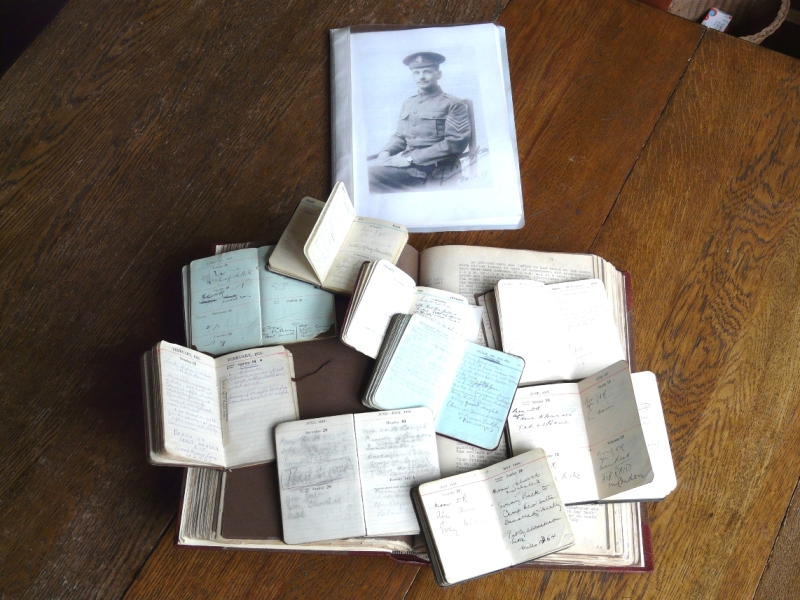
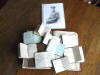
Sgt Bernard Joseph Brookes
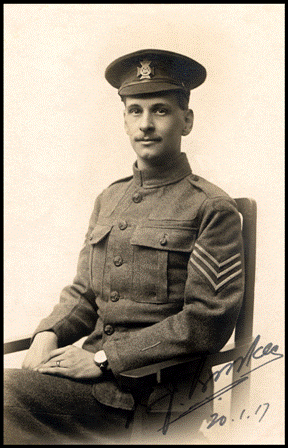
'Queen's
Westminster Rifles' 1914/1915
The
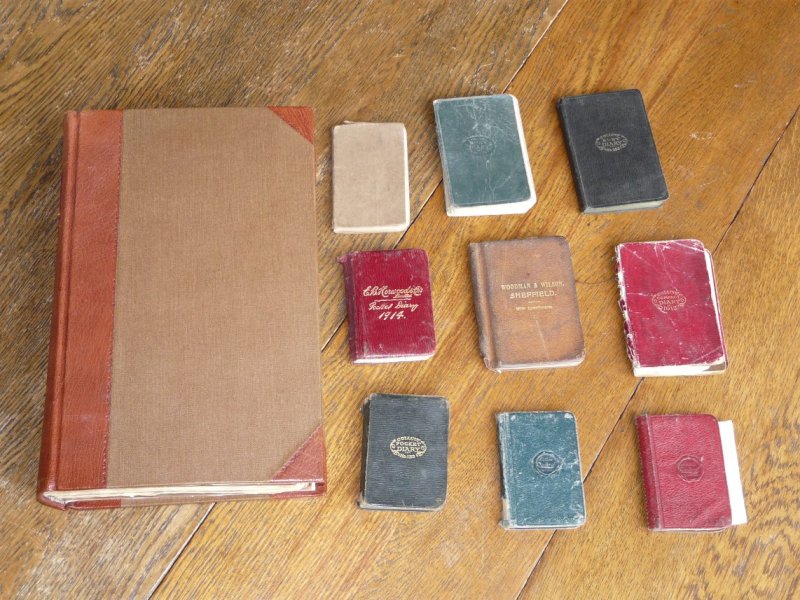
DIARY
was completed from his original pocket books while
convalescing.
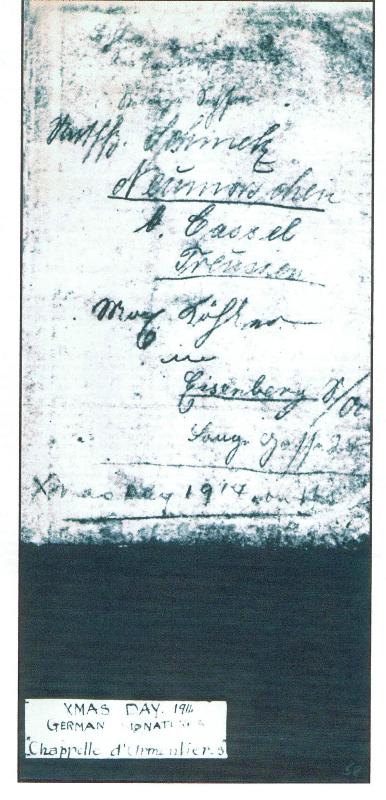
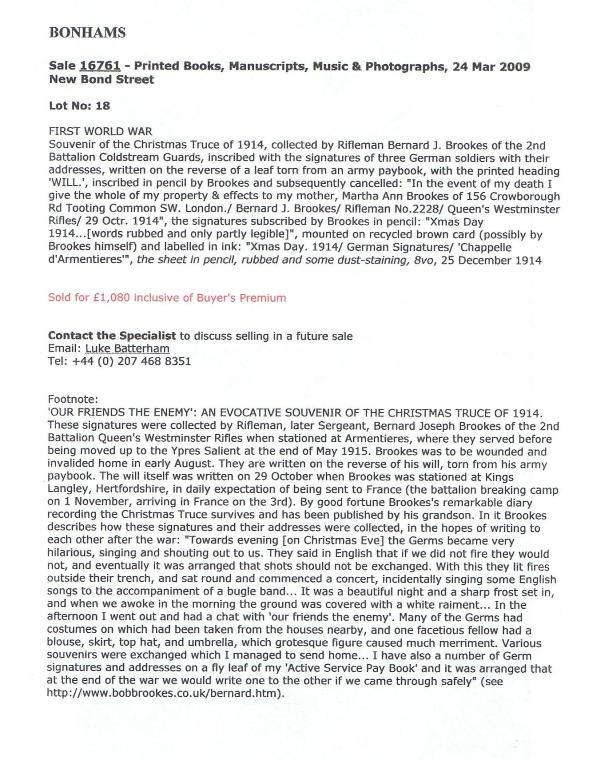
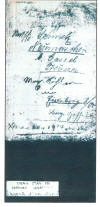
Signatures obtained during Christmas Truce
There is some mystery as to when these went missing, but I found the
following although neither the seller or buyer has ever contacted me!
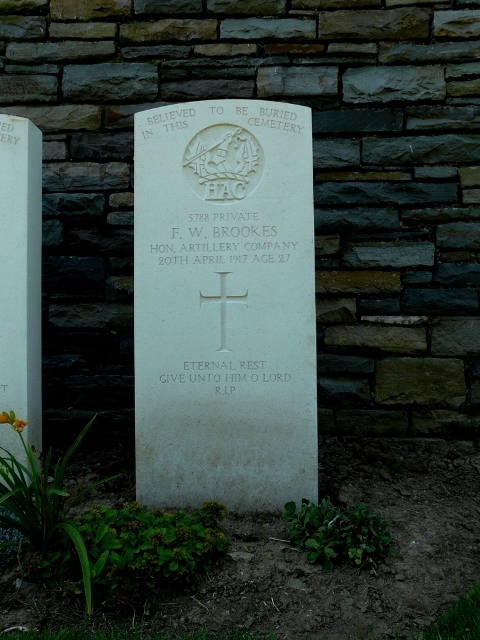
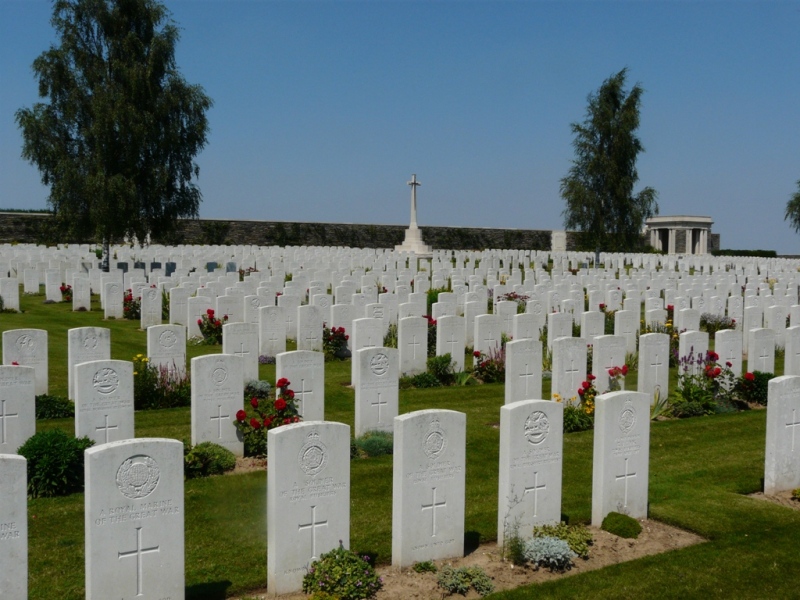
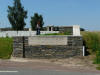
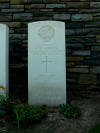
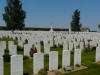
His brother was killed
later in the War and is believed to be buried in Orchard Dump Cemetery
*****
|
|















|
|
Below is a short extract of his
personal experience of the Christmas Truce.
Towards evening the Germs became very hilarious,
singing and shouting out to us. They said in English that if we did not fire
they would not, and eventually it was arranged that shots should not be
exchanged. With this they lit fires outside their trench, and sat round and
commenced a concert, incidentally singing some English songs to the
accompaniment of a bugle band. A German officer carrying a lantern came
slightly forward and asked to see one of our officers to arrange a truce for
tomorrow (Xmas day).
An officer went out (after we had stood at our posts with rifles loaded in case
of treachery) and arrangements were made that between 10 am and 12 noon, and
from 2.00 pm to 4.00 pm tomorrow, intercourse between the Germs and ourselves
should take place. It was a beautiful night and a sharp frost set in, and when we
awoke in the morning the ground was covered with a white raiment. It was indeed
an ideal Christmas, and the spirit of peace and goodwill was very striking in
comparison with the hatred and death-dealing of the past few months. One
appreciated in a new light the meaning of Christianity, for it certainly was
marvellous that such a change in the attitude of the opposing armies could be
wrought by an Event which happened nigh on 2000 years ago.
25.12.1914 (Xmas
day)
During the night two men were reported to be missing and I had to go out early
in the morning on my cycle to try to find them. I went to the Dressing Station
in Chappelle d'Armentieres a mile or so away, but they had not been there.
Later in the day the Bosches told us that two men the night before had walked
into their trench in a state which proved that they had "drunk of the
loving cup, not wisely, but too well". We asked that they should be
returned to us, but they refused on account of the fact that these men had seen
the position of their machine guns. They promised, however, to wire to their
headquarters, and see what could be done in the matter. Later we were informed
that it had been decided to intern them in a Civilian Camp, and not treat them
as prisoners of war, so as this seemed fair and the only course open we left it
at that.
At 9 am as I was off duty I received permission to go to Mass at a Church which
I had discovered whilst hunting for the missing men. This Church was terribly
shelled, and was within the range of rifle fire, as was clearly proved by the
condition of the wall facing the trenches, and no effort had been made to clear
the wreckage, as to attempt this would have been fraught with danger. A priest,
however, had come in from Armentieres to minister to the few people who were
still living in the district. In this Church which would hold about 300, there
were some 30 people, and I was the only soldier. It was indeed a unique
service, and during a short address which the priest gave I was about the only
one who was not crying, and that because I did not understand much of what was
being said.
I returned to headquarters and went on duty from noon to 2 PM, during which
time I partook of my Christmas Fair which consisted of "Bully",
"Spuds", Xmas pudding, and vin rouge, which latter we found in one of
the cellars on the farm.
In the afternoon I went out and had a chat with "our friends the
enemy". Many of the Germs had costumes on which had been taken from the
houses nearby, and one facetious fellow had a blouse, skirt, top hat, and
umbrella, which grotesque figure caused much merriment. Various souvenirs were
exchanged which I managed to send home. We also had an opportunity of seeing
the famous Iron Cross which some of the men wore attached to a black and white
riband. These crosses are very well made and have an edging of silver. The
man's name is engraved on one side, and the reason of the award briefly stated
on the other. I have also a number of Germ signatures and addresses on a fly
leaf of my "Active Service Pay Book" and it was arranged that at the
end of the war we would write one to the other if we came through safely.
The Germs wanted to continue a partial truce until the New Year, for as some of
them said, they were heartily sick of the war, and did not want to fight, but
as we were leaving the trenches early next morning, and naturally did not want
them to know, we insisted on the truce ending at midnight, at which time our
artillery sent over to them four shells of small calibre to let them know that
the truce, at which the whole World would wonder, was ended, and in its place,
death and bloodshed would once more reign supreme.
*********
|
My Aunt has produced a Paperback version of the Diary with extra information
Book
Kindle
iBookstore
NOOK
Other eBook
Proceeds from this sale will be donated to the
Royal
British Legion
On Line & free downloadable formats are available HERE
*******
After the War he married my grandmother and had Five children
They were all still living at the beginning of the Centenary in 2014
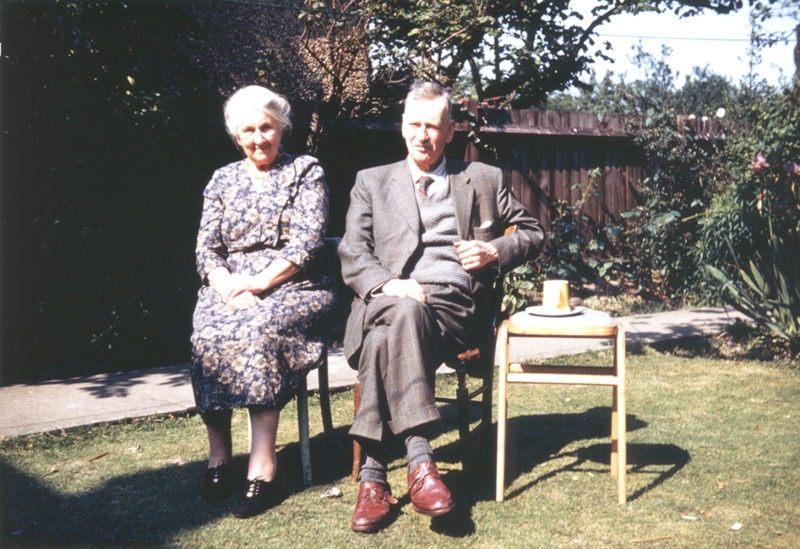
He died in 1962 at the age of 69
RIP
*****
By way of an introduction the following is the text of an article written by
my ant Una for the Catenian magazine Catena
Bernard Brookes
My father, Bernard Brookes, was
born on 16th January 1893. On leaving school he became a bank clerk in the City
of London and was enjoying a cycling holiday when war was declared in August
1914. Immediately, he enlisted in the Queens' Westminster Rifles and sold his
bicycle to the army. After basic training, he was selected to be a signaller.
A Signaller on the Western Front -1914
My father arrived in France on
1st November 1914 and became part of the British Expeditionary Force - 'the Old
Contemptibles'. Signallers had certain privileges, denied to infantrymen,
because the instruments they used had to be kept dry. For this reason they had
the best dug-outs and were not involved in guard duty or much digging.
However, they still endured the
mud and hardships and engaged in battle. Frequently signallers went 'over the
top' to repair the wires or deliver messages verbally all along the front line.
My father was responsible for map reading and leading his section.
On Christmas
Day 1914, warfare was suspended. In a letter of three instalments he told his
mother that he went to Mass and then he and his comrades fraternised and
exchanged souvenirs with the Germans. They visited German trenches, shook hands
and shared their food. He collected names and addresses of those whom he met,
intending to communicate with them after the war. Perhaps they were killed, as
he never had a reply from them.
Life in the Trenches
Men in the trenches got to know
each other well and it must have been harrowing for them to see their comrades
fall in battle. In one battle about 1,000 men took part and 693 were killed. As
my father wrote in his diary, 'It would make for depressing reading to dwell on
such fatalities', so instead he recalled many humorous incidents. Sometimes the
men added to their diet of 'bully' and spuds with food they 'found'.
Once he 'found
a chicken which was anxiously looking for a home, and after mercifully wringing
its neck, sat in a shell hole nearby and commenced the very trying occupation of
plucking its feathers'. In nearby fields they 'found' peas which they stuffed
into their pockets, and with light hearts and under cover of darkness, retraced
their steps where they displayed their trophies to the rest of the section.
On another
occasion he and a companion climbed a shelled factory chimney. His pal went
first showering my father with soot and through a hole near the top they were
able to watch the Germans behind their lines. Then they were spotted and had to
make a hasty retreat. The Germans wasted a lot of shells on the chimney during
the next few days thinking it was a British lookout post.
Religion at the Front
My father would cycle to Mass
every Sunday if at all possible. He was particularly struck by the frequency
with which roadside crucifixes were left intact and wrote, 'I have since seen
several cases of wholesale damage within a few feet of a crucifix, which however
had not been touched'. He saw 'a crucifix about 10 feet long by some 6 feet
wide, and the wall behind this crucifix was absolutely undamaged, although the
wall on the other side of the church as well as the entire roof, was razed to
the ground'. In a cemetery, graves had been opened by shellfire, and bones,
coffins and tombstones were smashed but tombstones made in the form of a
crucifix, although damaged by shrapnel, remained intact. He noted that at Ypres
a large crucifix stood over the cathedral that had been almost totally
destroyed. A fellow-signaller, a man of no religion, "remarked on the wonderful
preservation of the crucifix and mentioned to me, that although he had not been
to church for many years beyond attending church parades, "there must be
something in it"
and we enjoyed, on our way back,
quite an interesting religious talk and it is very likely that good may result
to both of us by what we saw this evening. One realised at this time how true is
the expression "God's ways are not as our ways".
1915 - Escape from a Shell Crater
In August 1915 Bernard was in
the line at Sanctuary Wood. Bombardment was heavy, communication wires had been
cut and he was ordered to deliver a message. Two other signallers had been
killed, trying to deliver that important message earlier in the day but as
Bernard had successfully delivered two other messages earlier that morning, and
'knew the way', he had to go 'over the top' a third time. The Germans were
firing a 17inch gun. British artillery tried to silence it but failed and so it
kept firing systematically the whole day, ploughing up trenches and shaking the
earth. The shells could be heard coming from a long distance away, its roar
gradually growing more intense as it approached the trenches, and then dirt, men
and wood were flung up into the air. The gun was still firing when Bernard
started out with his message, so he dropped down into the communication trench
nearby, filled with water and dead men, treading on everything that came in his
way. In the trench, lay men of the King's Royal Rifle Corps who had been caught
by liquid fire a few days previously: the three letters on their epaulets were
forever engraved on his mind. He was soaked and covered in mud and found it
impossible to continue along the trench. He climbed out and with his rifle
smothered in mud and bayonet fixed continued with the message. A shell burst
overhead and threw him into a crater. Some men in a nearby British trench
spotted him and ran to give him a hand. He delivered the message but on the
return journey another shell burst nearby and he remembered no more. He was
taken out of the trenches semi-conscious and unable to speak and was transferred
to Blighty.
Blighty and After
Bernard was taken to StAnselm's
Military Hospital in Walmer. In October he considered himself fit for duty but
was told he could not return to front line duty. He immediately volunteered for
Home Service and served as a medical orderly at Epsom Military Convalescent
Hospital, Epsom, for the rest of the war. He had been promoted Corporal in 1916
and subsequently became Company Quartermaster Sergeant (1917) and Regimental
Quartermaster Sergeant (1917). He also edited the hospital magazine called The
Monthly Tonic. Bernard was demobbed in June 1919.
After the war
he joined the Catenian Association as a member of Croydon Circle and served as
Secretary for a number of years. He never regretted joining the army and in
World War II served with the Home Guard.
My father's
war diary has been published as A Signaller's War and is available on Amazon as
paperback, Kindle and eBook versions. See
www.ASignallersWar.co.uk for more information. All profits go to the Royal
British Legion for disabled ex-servicemen.